
If you vape regularly, you’ve probably wondered: can you vape in a hospital—especially during long visits, emergencies, or while waiting for someone. Hospitals can be stressful environments, and stepping outside isn’t always convenient. But before you take a puff indoors, it’s important to understand the legal rules, hospital policies, and potential consequences.
This guide breaks down what’s actually allowed, what’s not, and what to expect in real-world situations.
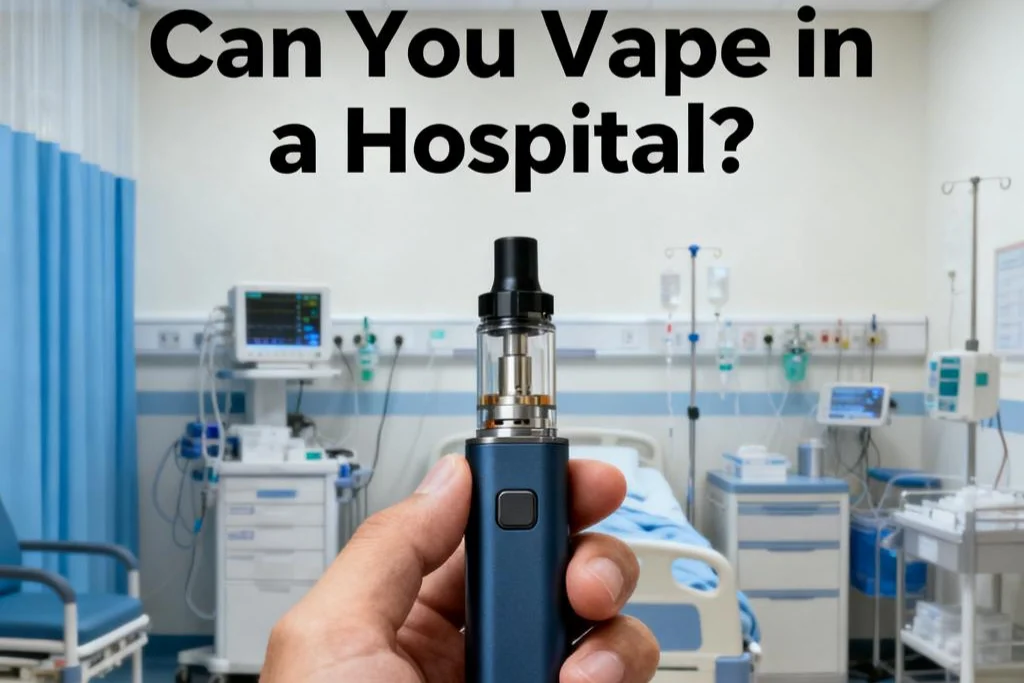
Can You Vape in a Hospital?
Hospitals across the U.S. and many other countries enforce strict smoke-free and vape-free policies. These rules typically apply to:
- Indoor areas (rooms, hallways, restrooms)
- Entrances and waiting areas
- Often the entire hospital campus, including parking lots
Vaping is usually treated the same as smoking under hospital regulations.
Why Hospitals Ban Vaping
Hospitals don’t prohibit vaping arbitrarily. The restrictions are based on several factors:
1. Patient Health Protection
Hospitals care for individuals with respiratory conditions, compromised immune systems, and serious illnesses. Even aerosol from e-cigarettes may pose risks in sensitive environments.
2. Indoor Air Quality Standards
Many hospitals follow clean air policies aligned with local or state laws. These often include vaping under “smoke-free” definitions.
3. Fire and Safety Risks
Although rare, vaping devices can malfunction. Hospitals minimize all potential hazards, especially around oxygen equipment.
4. Regulatory Compliance
In many U.S. states and cities, vaping indoors is legally restricted in healthcare facilities.
What Do U.S. Laws Say?
There is no single federal law that explicitly bans vaping in hospitals, but:
- Many states include e-cigarettes in Clean Indoor Air Acts
- Local governments often extend smoking bans to vaping
- Hospitals implement their own stricter policies regardless of state law
Example Trends (2026)
- California: Vaping is prohibited in all smoke-free areas, including hospitals
- New York: E-cigarettes are included in indoor smoking bans
- Texas & Florida: Policies vary locally, but hospitals almost תמיד enforce bans
Even where laws are less strict, hospital policy still overrides personal preference.
Are There Designated Vaping Areas in Hospitals?
Sometimes—but increasingly rare.
Some hospitals may provide:
- Outdoor smoking/vaping zones
- Designated areas far from entrances
However, many healthcare systems are moving toward 100% tobacco- and vape-free campuses, meaning:
- No vaping anywhere on hospital grounds
- No exceptions for visitors or staff
What Happens If You Vape in a Hospital?
If you vape inside a hospital, consequences can include:
- Verbal warning from staff or security
- Being asked to leave the premises
- Confiscation of the device (in stricter facilities)
- Fines if local laws are violated
In extreme cases—especially if it disrupts care—you could face legal consequences.
Can Patients Vape in Hospital Rooms?
Generally, no—even patients are not allowed to vape indoors.
However, there are exceptions in controlled circumstances:
- Some patients may receive nicotine replacement therapy (NRT) such as patches or gum
- In rare cases, hospitals may allow supervised outdoor breaks for stable patients
For admitted patients, always check with medical staff before using any nicotine product.
What About Bathrooms or Private Areas?
Vaping discreetly in bathrooms or private rooms is still against hospital policy.
Most hospitals now have:
- Smoke/vape detectors
- Staff monitoring systems
- Strict enforcement protocols
Trying to hide vaping indoors can lead to faster escalation than asking for guidance.
Best Alternatives If You Need Nicotine
If you’re in a hospital for an extended time, consider:
- Nicotine gum or lozenges
- Nicotine patches
- Stepping outside to designated areas (if permitted)
Hospitals often support nicotine management to help patients and visitors comply with policies.
Practical Tips for Visitors
- Ask staff where (if anywhere) vaping is allowed
- Plan ahead before long visits
- Respect signage—rules are usually clearly posted
- Avoid “stealth vaping”—it’s not worth the risk
Conclusion
In almost all cases, no—vaping is prohibited inside hospitals and often across the entire campus. These rules are designed to protect patient health, maintain air quality, and comply with public health laws.
If you need to vape, look for designated outdoor areas or consider nicotine alternatives during your visit. When in doubt, ask staff—hospital policies are strict, but they’re also there for a reason.
FAQs
1. Can you vape in a hospital bathroom?
No. Hospital bathrooms are included in indoor vape bans, and many are equipped with detectors. Violating this rule can lead to warnings or removal.
2. Is vaping treated the same as smoking in hospitals?
Yes. Most hospitals classify vaping under the same policies as smoking, meaning both are prohibited indoors and often on campus.
3. Can hospital staff vape during work hours?
Only in designated areas (if available). Many hospitals require staff to leave campus or use approved outdoor zones.
4. Are there any hospitals that allow vaping indoors?
Very few, if any. The trend in 2026 is toward completely vape-free healthcare campuses.
5. What should I do if I need nicotine during a hospital visit?
Use nicotine replacement options like gum or patches, or ask staff about permitted outdoor areas.