
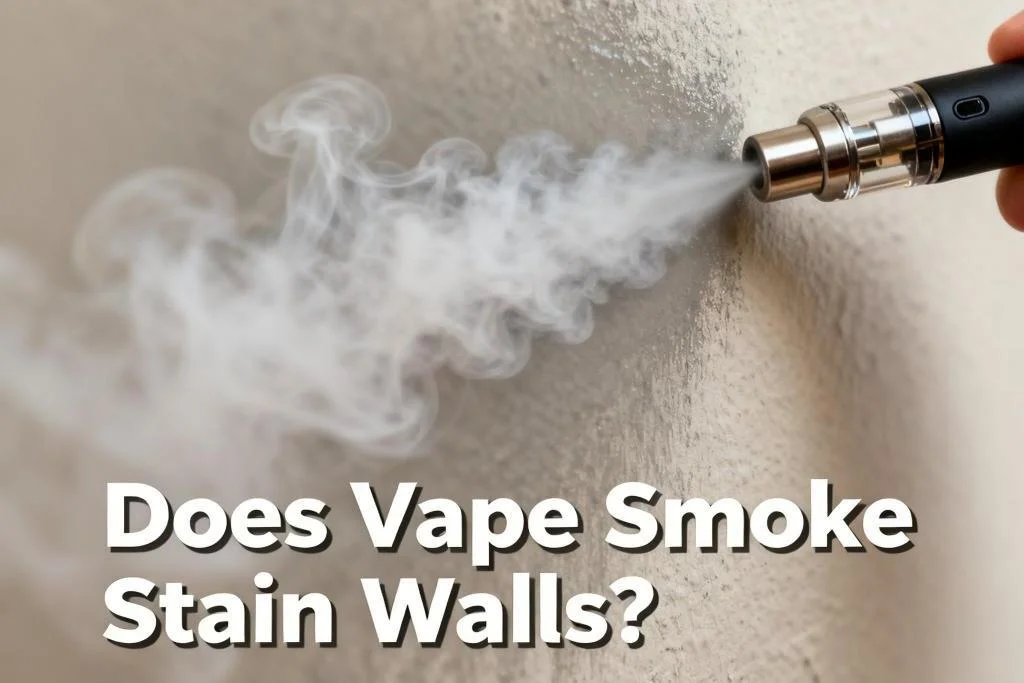
As vaping becomes increasingly common in homes, apartments, and offices, many users wonder whether vapor can leave marks on walls like traditional cigarette smoke. Vape vapor can stain walls under certain conditions, although the effect is usually far less severe than cigarette smoke. Understanding how and why this happens can help you protect your indoor spaces and maintain better air quality.
How Vape Vapor Interacts With Walls
Unlike cigarette smoke, which contains tar and thousands of combustion byproducts, vape aerosol is produced by heating e-liquid. This aerosol mainly consists of propylene glycol (PG), vegetable glycerin (VG), nicotine, and flavoring compounds. When exhaled repeatedly in enclosed spaces, these particles can settle on surfaces, including walls and ceilings.
Over time, this residue may create a thin film or discoloration, especially on light-colored walls. While it may not look as dramatic as nicotine stains from cigarettes, it can still affect the appearance of interiors if vaping is frequent and ventilation is poor.
Factors That Influence Wall Staining From Vaping
Several factors determine whether vape vapor will stain walls:
1. Frequency of Vaping
Heavy indoor vaping increases the likelihood of residue buildup. Occasional use typically has minimal impact, but daily vaping in the same room can gradually leave marks.
2. E-Liquid Composition
High-VG e-liquids produce thicker clouds, which are more likely to condense on surfaces. Sweet or dark-colored flavorings can also contribute to visible residue.
3. Nicotine Content
Nicotine itself can oxidize and slightly yellow surfaces over time, especially in poorly ventilated environments.
4. Ventilation and Airflow
Rooms with limited airflow allow aerosol particles to linger longer, increasing the chance of surface buildup. Proper ventilation significantly reduces staining risks.
5. Wall Material and Paint Type
Flat or matte paints absorb residue more easily than glossy or washable finishes. Porous surfaces are more vulnerable to discoloration.
Vape vs Cigarette Smoke: Which Stains More?
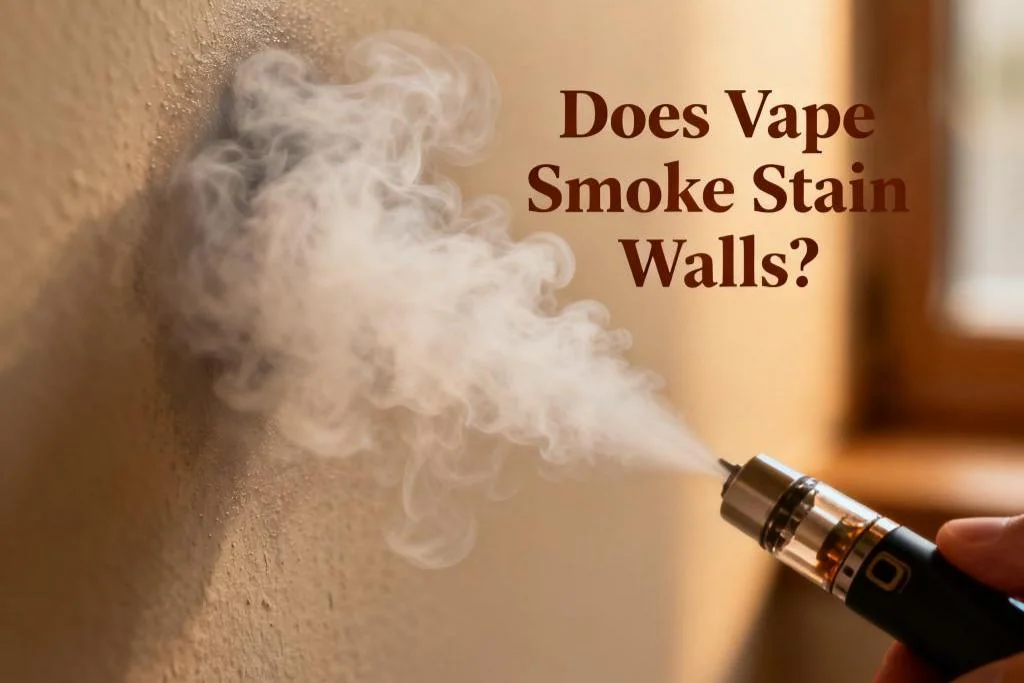
Compared to cigarette smoke, vape vapor is much less likely to stain walls. Cigarette smoke contains tar and carbon particles that strongly adhere to surfaces, creating yellow or brown stains that are difficult to remove. Vape residue, by contrast, is usually lighter and easier to clean, but it is not completely harmless to surfaces.
Signs That Vape Vapor Is Affecting Your Walls
You may notice subtle indicators such as:
- Slight yellowing or dull patches on white walls
- Sticky or oily film on surfaces
- Lingering sweet or chemical odors
- Dust sticking more easily to walls and ceilings
These signs suggest that aerosol particles are accumulating over time.
How to Prevent Vape Stains on Walls
If you vape indoors, these practical steps can help minimize wall staining:
- Improve ventilation by opening windows or using fans
- Use air purifiers with HEPA or carbon filters
- Reduce cloud production by adjusting device settings
- Wipe walls periodically with mild cleaning solutions
- Choose washable or semi-gloss paint finishes for frequently used rooms
Are Vape Stains Permanent?
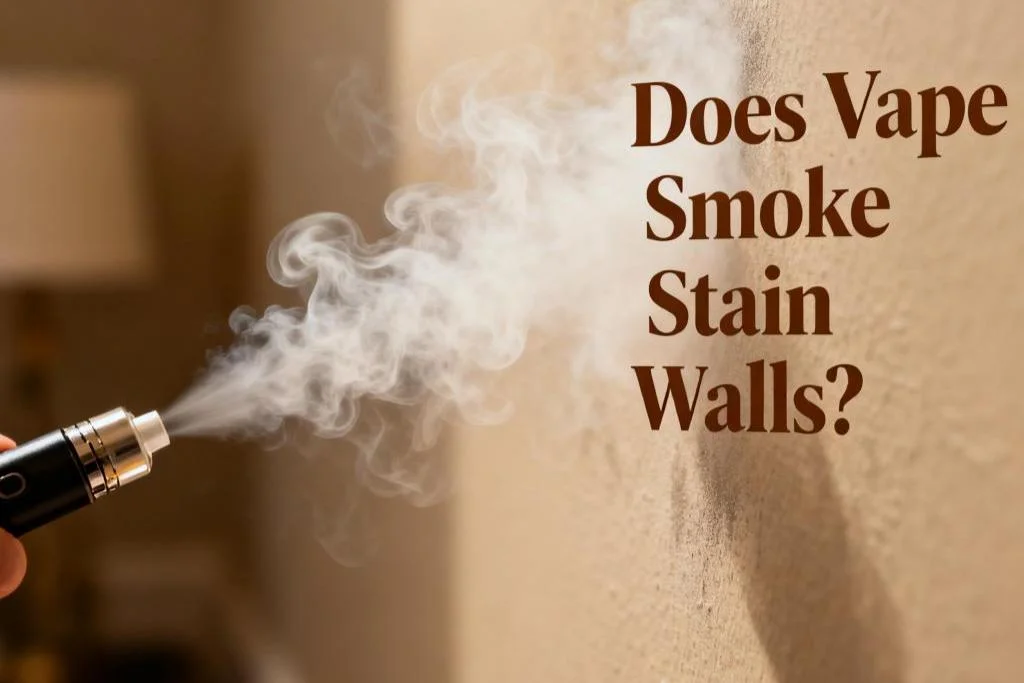
In most cases, vape-related residue is not permanent. Light stains can usually be removed with gentle cleaning, while more noticeable discoloration may require repainting. Compared to cigarette smoke damage, vape stains are generally easier and cheaper to fix.
Conclusion
Vape vapor can lightly stain walls over time, especially with frequent indoor use of a vape product in poorly ventilated spaces, but the residue is usually mild and easy to clean compared to cigarette smoke. For those who vape indoors regularly, taking preventive measures is the best way to protect both walls and indoor air quality.
FAQs
1. Does vaping indoors leave residue on walls?
Yes, vaping indoors can leave a thin residue on walls, especially with frequent use and poor ventilation. However, the buildup is usually lighter than cigarette smoke stains.
2. Can vape vapor turn walls yellow?
It can cause slight yellowing over time, particularly on white walls, mainly due to nicotine oxidation and accumulated aerosol particles.
3. Is vape residue harmful to paint?
Vape residue is not highly corrosive, but it can dull the finish and attract dust, making walls look dirty and less vibrant.
4. How do you clean vape stains from walls?
You can clean vape residue using warm water, mild detergent, or vinegar-based solutions. For stubborn stains, repainting may be necessary.
5. Is vaping less damaging to walls than smoking?
Yes. Compared to cigarette smoke, vaping causes significantly less staining and odor, and any residue is generally easier to remove.